On this page6 sections
You built an app with Lovable, Bolt, Cursor or Replit. It works, people use it, and now it needs things the AI tool did not give you: proper logins and roles, each customer’s data kept apart, real billing, monitoring. So you start asking around, and the quotes make no sense. One person offers to fix it for a few hundred dollars. An agency quotes forty thousand. Both say the same words: “make it production-ready”.
Both can be honest. They are pricing different jobs. Here is what the market actually charges, what each price buys, and what decides where your app lands.
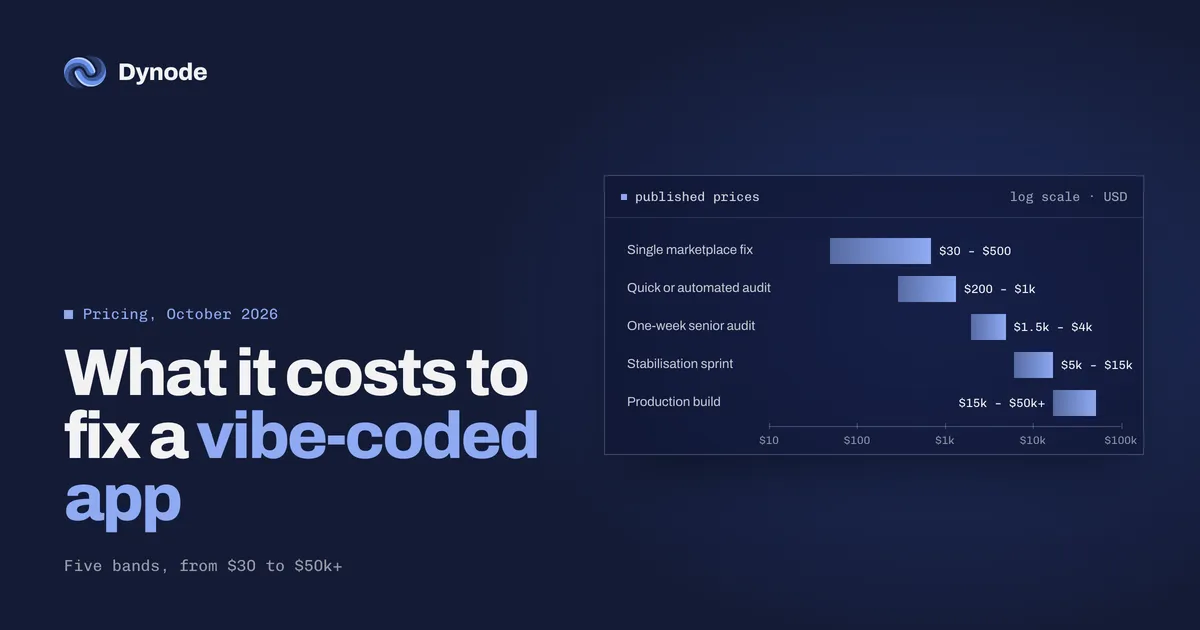
What the market charges, in five bands
These ranges come from prices that studios, freelancers and marketplaces published as of October 2026. They are asking prices, not invoices, but they show the shape of the market clearly.
| What you buy | Typical published price | What it usually covers |
|---|---|---|
| A single fix from a marketplace | From about $30 to a few hundred dollars | One bug or one feature, with no view of the rest of the app |
| Quick or automated audit | About $200 to $1,000 | A scan or a day of review, a short report of risks |
| One-week senior audit | About $1,500 to $4,000 | A senior engineer reads the code, data and setup and ranks what to keep, fix and add; often credited against the build |
| Stabilisation sprint | About $5,000 to $15,000 | One to two weeks fixing the most dangerous problems: security, data exposure, the worst bugs |
| Production build | About $15,000 to $50,000, more for complex SaaS | Four to eight weeks taking the app to production: access, data separation, billing, monitoring, tests, deployment |
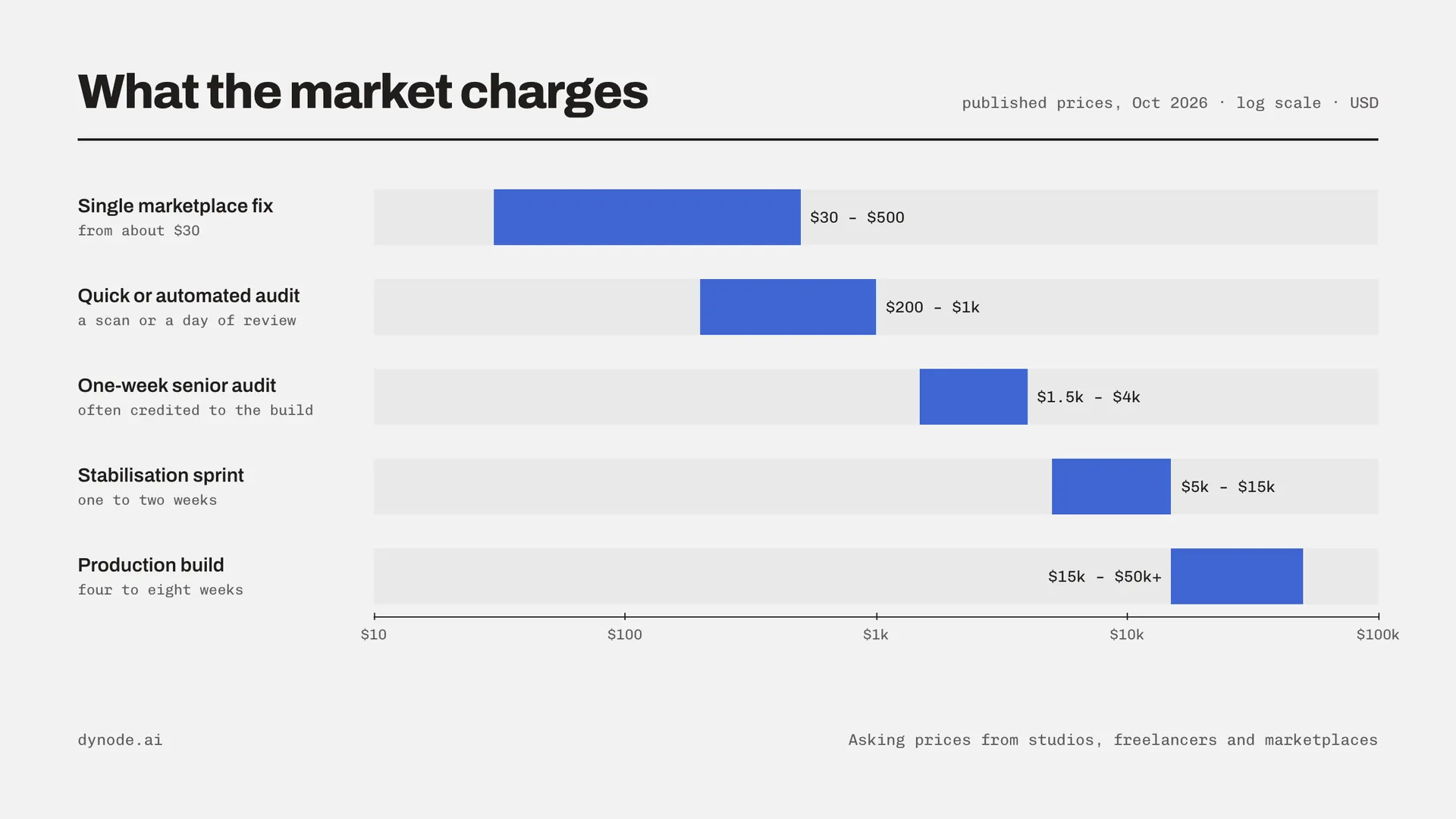
The jump between the bands is not padding. Each step up covers more of the app and takes on more of the risk.
Why two quotes can be ten times apart
A cheap fix answers the question you asked. A production build answers the questions your next customer will ask. If your login breaks and someone fixes the login, you paid for one fix. If your login breaks because there is no clear model of who can see what, the next fix will be needed next week, and the one after that.
That is why the most useful first purchase is usually not a fix at all. It is a short audit that tells you which kind of job you actually have.
What decides your price
Five things move a quote more than anything else.
How much of the prototype can stay. Screens and flows your users already know, business logic that is right and data you have collected can usually be kept. Logins bolted on afterwards, or a database with no line between one customer and the next, usually have to be rebuilt. The more that stays, the lower the price.
Whether customers share an account. An app where every user is on their own is simpler than one where several people belong to one company and must never see another company’s data. Multi-tenant data separation is the single biggest jump in scope.
Money. Taking real payments means subscriptions, invoices, failed cards, refunds and webhooks that keep your database in step with the payment provider. A prototype rarely has any of it.
AI features. If your app calls a model, production means evals that test its answers before each release, fallbacks for when it is wrong or slow, and cost limits. That is work a prototype never needed.
The date. A pilot customer starting in three weeks changes the plan more than any feature does.
Fixed price or hourly
Hourly work suits a scope that will keep moving. If you want to keep experimenting, pay for time.
For taking a working prototype to production, a fixed price usually serves you better, for one reason: you know the cost before the work starts, and the risk of underestimating sits with the people doing the estimate. The catch is that nobody can fix a price honestly without reading the code first. A fixed quote given after a thirty-minute call is a guess with a number on it.
How to spend less
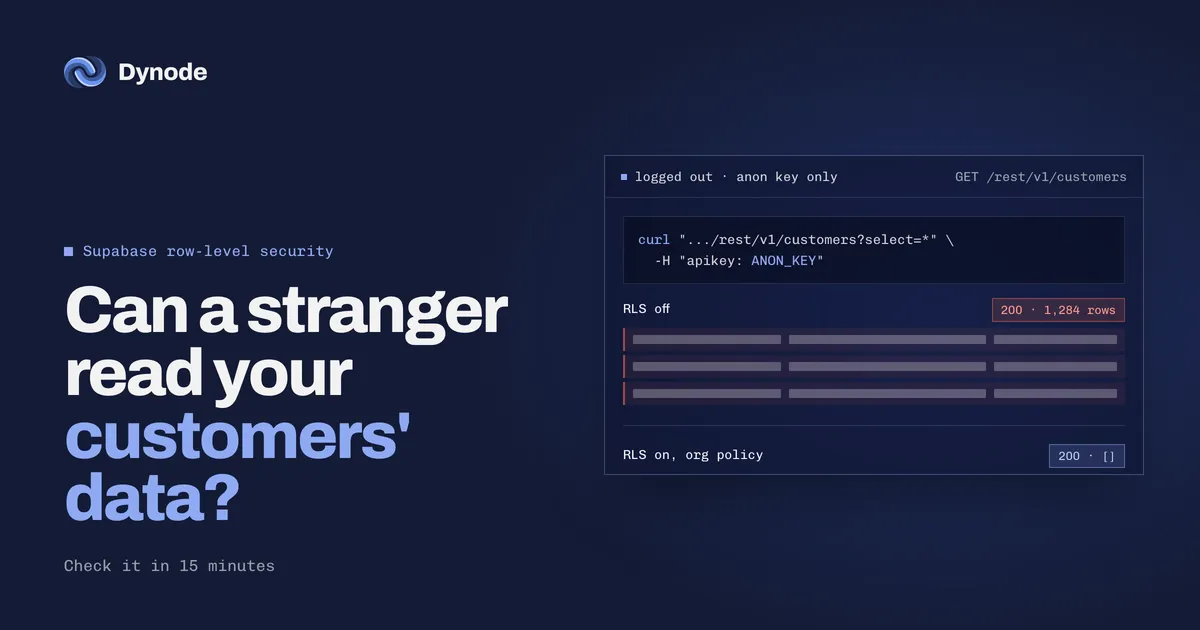
Fix exposed data first. If customer records can be read by anyone, that comes before every other item, whatever it costs. Our guide to checking row-level security in Supabase apps shows how to test this yourself in fifteen minutes.
Keep what works. Ask any studio what they would keep. A quote that rebuilds everything by default is the most expensive answer.
Scope to the next customer. Not every product needs single sign-on, translations or data residency on day one. Build what the next customer needs and plan the rest.
Insist on seeing working software every week. If a project goes wrong, you find out in week one, not week eight.
Make sure you own the code. Stopping should never mean starting from nothing.
A simple way to decide
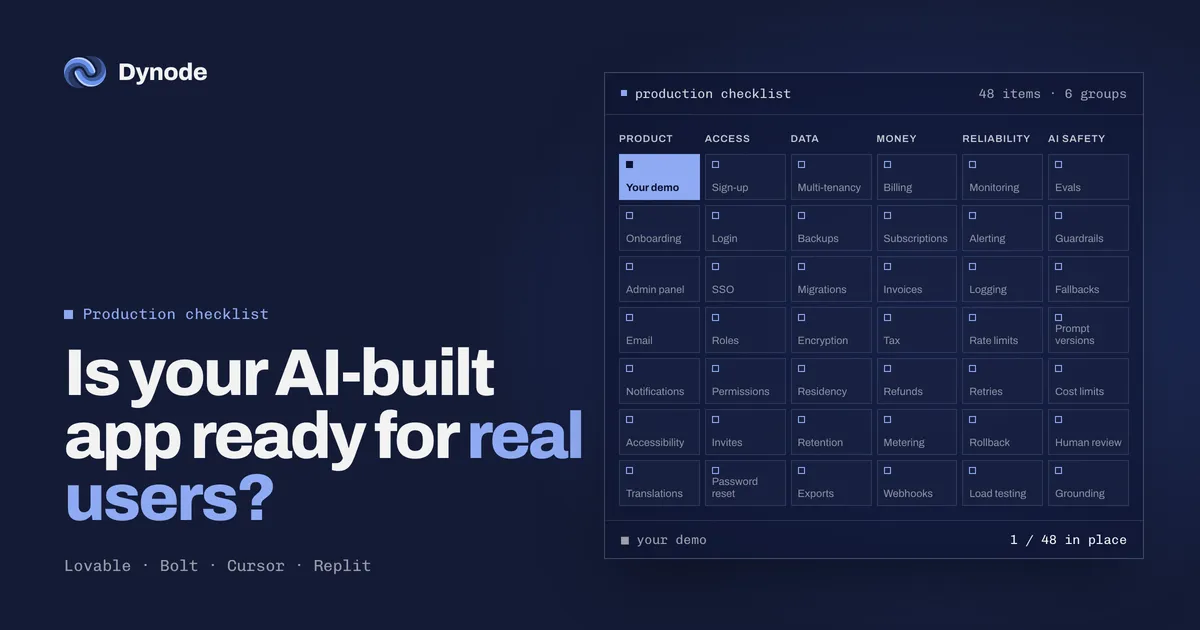
Go through a production checklist with your app open. Our production checklist for AI-built apps is a good place to start. If almost everything is already there, you need a few fixes, and a marketplace or a short sprint is fine. If most of the list is missing, you need a production build, and the right first step is an audit that sorts every part into keep, rebuild or add before anyone quotes a number.
That is how we work at Dynode. Every engagement starts with a one-week audit at a fixed price, then a one-week blueprint that puts a fixed price on the build in writing, before any code. Most prototype to production builds take four to eight weeks, you see a working build every week, and the code is yours.
FAQ
3 short answers, if you skimmed to the end.
How much does it cost to fix a vibe-coded app?
Published prices as of October 2026 range from about $30 for a single marketplace fix, to $1,500 to $4,000 for a one-week senior audit, to roughly $15,000 to $50,000 for a four to eight week production build. Complex multi-tenant SaaS can cost more.
Why are quotes so different?
They price different jobs. A cheap fix solves one problem. A production build adds access control, data separation, billing, monitoring and tests across the whole app. An audit tells you which job you actually have.
Is fixed price or hourly better?
For taking a working prototype to production, a fixed price agreed after someone has read the code usually serves you better, because you know the cost before the work starts. Hourly suits work whose scope will keep changing.